


What Is Illustration Art? The Creative Magic Behind Every Image
Have you ever looked at a book cover and felt an immediate pull to open it? That magnetism isn’t accidental; it’s the result of skilled visual storytelling. We often see illustration Art as just pretty pictures, but it is actually a powerful language that speaks before a single word is read. Whether it’s a sprawling fantasy landscape or a technical diagram, illustration bridges the gap between raw ideas and visual understanding.
At its core, illustration is about clarification and illumination. While fine art often exists to ask questions, illustration exists to provide answers or enhance a specific narrative. It’s the visual partner to a story, concept, or process. It takes the abstract—a feeling, a plot point, a scientific theory—and gives it a concrete form that we can recognize and connect with emotionally.
This medium has evolved far beyond ink on paper. Today, it encompasses everything from digital rendering to mixed media collage. Yet, regardless of the tool used, the goal remains consistent: to communicate a message. When you look at an illustration, you aren’t just seeing lines and colors; you are reading a visual text that has been carefully crafted to guide your eye and your mind.
Defining Visual Narrative and Graphic Storytelling
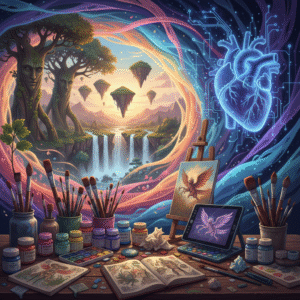
When we try to pin down exactly what illustrations of art is, we have to look at its primary function: storytelling. Unlike a gallery painting that might stand alone, an illustration usually serves a specific purpose. It might explain a complex editorial article, decorate a product package to suggest flavor, or bring a children’s book character to life. The artist here is a translator, turning text or concepts into imagery.
This translation process requires a deep empathy for the viewer. The illustrator must understand not just what looks good, but what feels right for the context. A medical journal requires precision and clarity, while a poster for a music festival demands energy and chaos. The “art” lies in knowing which visual vocabulary to use to speak to the intended audience effectively.
Historically, this art form has shaped how we view history, science, and literature. Before photography, illustrations were our only window into the exotic or the microscopic. Even with modern cameras, the illustrator’s hand offers something unique—the ability to highlight, exaggerate, or simplify reality to make a point clearer than a photo ever could.
The Distinction Between Fine Art and Commercial Illustration
There is often confusion about where fine art ends and illustration begins. The dividing line is usually intent. Fine art is typically an expression of the artist’s inner world, created without a specific client or commercial directive in mind. Illustration art, however, is problem-solving. It starts with a brief: a story that needs a face, a product that needs a mood, or a concept that needs explaining.
Consider a delicate floral pattern on a greeting card versus a still-life painting of flowers in a museum. The museum piece might explore light, decay, or the artist’s sorrow. The greeting card illustration is designed to evoke joy, sympathy, or celebration for the buyer. Both require immense skill, but they serve different masters. One serves the artist’s soul; the other serves a communicative purpose.
This doesn’t mean illustration lacks soul. On the contrary, the best illustrators inject their unique voice into their commercial work. They find the intersection between what the client needs and what they, as artists, want to say. This balance is what transforms a simple commercial drawing into a piece of art that resonates with thousands of people.
Evolution of Editorial and Digital Imagery
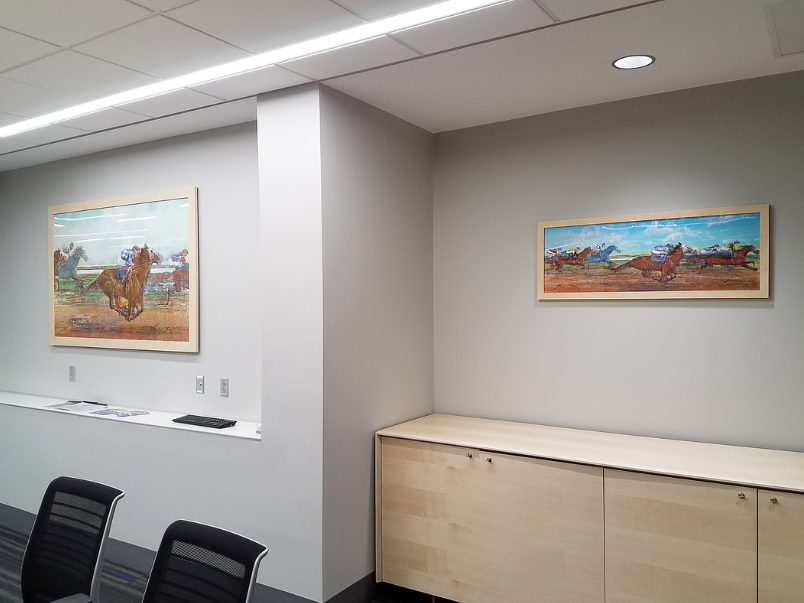
The journey of illustration art has been a wild ride alongside technology. In the golden age of illustration, artists like Norman Rockwell painted oil on canvas for magazine covers. These images were mass-produced, yet they started as traditional paintings. They defined the visual culture of their era, telling the stories of everyday life with warmth and humor.
As printing technology advanced, so did the style of illustration. We moved from woodblocks to lithography, and eventually to the digital screens we stare at today. The rise of digital tools has exploded the possibilities for illustrators. No longer bound by the drying time of paint, artists can iterate, layer, and experiment at lightning speed.
However, the heart of editorial imagery remains the same. Whether it’s a hand-drawn sketch for a newspaper or a sleek 3D render for a tech blog, the image must grab attention instantly. In a world scrolling by at high speed, the illustrator has mere seconds to hook the viewer. This pressure has birthed a new wave of bold, conceptual styles designed to stop the scroll.
Exploring Different Styles of Interpretive Drawing
The beauty of illustration art lies in its incredible diversity. There is no single “look” that defines it. One artist might use thick, aggressive charcoal strokes to convey anger or urgency, while another uses soft watercolors to suggest memory or dream states. These stylistic choices are the artist’s toolkit for manipulating the viewer’s emotional response.
Some illustrators specialize in realism, creating work so detailed it rivals photography. Others lean into abstraction, using shapes and colors to suggest forms rather than dictate them. This stylistic range allows illustration to fit into almost any context, from a corporate annual report to a gritty graphic novel. It is a chameleon art form, constantly adapting to the needs of the message.
Within this broad spectrum, certain themes and subjects often require specific approaches. For example, capturing the mood of stormy seascapes might demand a loose, expressive style that mimics the motion of water. In contrast, illustrating a user manual requires a stripped-back, minimalist line style where clarity is king and style takes a backseat to function.
Whimsical and Fantasy Concept Art
One of the most popular and beloved sectors of illustration art is fantasy and whimsy. This is where the artist’s imagination is truly untethered. Concept artists for video games and movies are modern-day world-builders. They don’t just draw characters; they design ecosystems, architecture, and cultures from scratch. They must make the impossible look plausible.
This genre allows for a playfulness that is harder to justify in other fields. Here, trees can walk, gravity can be optional, and colors can defy physics. But even in fantasy, the principles of good illustration apply. The lighting must guide the eye, the composition must tell a story, and the design must communicate the personality of the world being depicted.
It connects deeply with our inner child. When we see a whimsical illustration, we are transported back to a time when the world felt magical and limitless. This emotional connection is a powerful tool for brands and storytellers. It bypasses our cynical adult brains and speaks directly to our sense of wonder.
Technical and Scientific Visualization
On the other end of the spectrum lies technical illustration. This is the art of precision. Think of the cutaway drawing of a car engine or a diagram of the human heart. These images require a different kind of creativity—the creativity of clarity. The illustrator must understand the mechanics of the subject matter deeply enough to explain it visually to a layperson.
This field is crucial for education and industry. A photograph of surgery can be messy and confusing, but an illustration can remove the blood and tissue to reveal the specific procedure clearly. Similarly, in the world of sports, illustrations break down complex plays or biomechanics in ways that video footage sometimes cannot capture.
Technical illustration art is often unsung, but it is everywhere. It’s in the instruction manual for your furniture, the safety card on your airplane, and the textbook in your child’s backpack. It requires a disciplined hand and an analytical mind, proving that creativity isn’t always about wild expression; sometimes, it’s about disciplined communication.
The Modern Illustrator’s Toolkit and Techniques
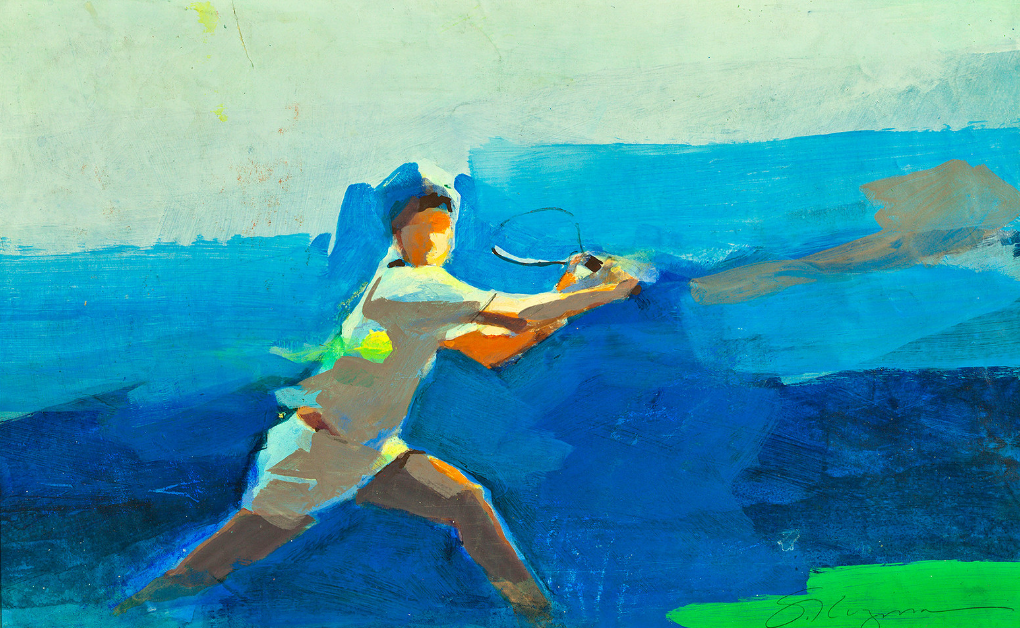
The modern illustrator is often a hybrid creative, comfortable with both a graphite pencil and a stylus. The romantic image of the artist in a paint-splattered smock is now often replaced by someone sitting at a dual-monitor setup. But the tools are just means to an end. The magic still happens in the brain, in the ability to conceptualize an idea before the hand ever moves.
Software like Adobe Photoshop, Procreate, and Illustrator has revolutionized the workflow. Layers allow for non-destructive editing, meaning an artist can change the color of a shirt or the size of a building without scraping paint off a canvas. This flexibility has made illustration a viable career in fast-paced industries like advertising and web design.
However, many artists are swinging the pendulum back, mixing digital and traditional media. They might ink a drawing of trees by hand to get that authentic texture of bark and leaf, scan it, and then color it digitally. This hybrid approach keeps the warmth of human touch while gaining the speed and adaptability of digital software.
Traditional Media in a Digital World
Despite the dominance of screens, traditional media holds a special place in illustration art. There is a tactile quality to watercolor, gouache, and ink that digital can mimic but never quite replicate. The slight bleed of ink into paper or the granulation of watercolor pigment creates “happy accidents” that add character and life to an image.
Publishers and art directors often seek out traditional styles precisely because they stand out in a sea of clean, digital vectors. A hand-painted book cover feels personal and crafted. It suggests that a human being sat down and made this object for you. In an increasingly automated world, that human connection is becoming a premium commodity.
Understanding the materials is key. Knowing how different pigments interact or how paper tooth affects a pencil stroke gives an artist control over the final vibe of the piece. If you are curious about the physical side of creation, you can Learn more about types of paint for art to see how the medium truly dictates the message.
Watercolor and Ink Wash Applications
Watercolor remains a favorite for editorial and children’s book illustration art. Its transparency allows for light to shine through the paper, giving the images a luminosity that is hard to achieve with opaque paints. It creates a sense of atmosphere and mood instantly.
Ink wash, often used alongside line work, adds depth and dimension. It is a technique of building up values, from light greys to deep blacks. This monochromatic approach forces the artist to focus on lighting and composition without the crutch of color. It’s a classic style that feels both vintage and timelessly elegant.
Acrylic and Gouache Methodology
For illustrators who need punchier, more solid colors, gouache and acrylic are the go-to mediums. Gouache, often called “opaque watercolor,” dries to a beautiful matte finish that scans incredibly well. It was the standard for commercial illustration for decades before computers took over.
Acrylics offer durability and versatility. They can be watered down to look like watercolor or applied thick like oils. This adaptability makes them perfect for illustrators who like to experiment with texture and layering. These paints allow for bold, graphic shapes that pop off the page, making them ideal for poster art and vibrant editorial spots.
Final Thoughts: Why Illustration Matters
Illustration art is the background music of our visual lives. We might not always notice it consciously, but it sets the tone for how we consume information and entertainment. It makes the complex simple, the boring beautiful, and the imaginary real.
In a world that is increasingly visual, the ability to interpret and create images is more valuable than ever. Illustration isn’t just about decoration; it’s about connection. It reminds us that behind every product, every story, and every idea, there is a human imagination trying to reach out and touch another.
Whether you are an aspiring artist or just someone who appreciates a beautiful image, take a moment to look closer at the illustrations around you. Notice the line work, the color choices, and the composition. There is a little bit of magic hiding in plain sight, waiting for you to see it.
Top 5 FAQs About Illustration Art
1. What is the main difference between illustration art and fine art?
The primary difference lies in the intent behind the work. Fine art is typically created as a form of self-expression by the artist, without a specific client or commercial goal in mind. Illustration art, on the other hand, is communication-driven; it is created to clarify a concept, tell a story, or solve a visual problem for a specific purpose or client.
2. Do I need to be good at drawing to become an illustrator?
While drawing skills are fundamental, “good” is subjective. You don’t necessarily need to draw photorealistically. Many successful illustrators use abstract shapes, collage, or vector art where traditional drawing skills are less critical than a strong sense of composition, color theory, and storytelling. It is more important to communicate an idea effectively than to draw perfectly.
3. What tools do modern illustrators use most often?
Modern illustrators use a wide variety of tools. Digital artists commonly rely on tablets (like Wacom or iPad) and software such as Adobe Photoshop, Illustrator, and Procreate. Traditional illustrators still use physical mediums like watercolors, gouache, ink, and colored pencils. Many professionals use a hybrid workflow, starting on paper and finishing digitally.
4. Can illustration art be used for technical subjects?
Absolutely. Technical illustration is a specialized field dedicated to explaining complex mechanical, medical, or scientific concepts. These illustrations strip away unnecessary details to provide a clear, accurate visual explanation of how something works, often providing clarity that a photograph cannot.
5. Is digital illustration considered “real” art?
Yes, digital illustration is a legitimate and highly skilled form of art. The computer is simply a tool, much like a paintbrush or a pencil. The creativity, understanding of anatomy, lighting, perspective, and composition still come from the artist. Digital tools offer efficiency and editability, but they do not replace the artistic skill required to create compelling imagery.